
Hello! Thank you for joining me on this Deep Dive. Today we’re going to look at some important words and phrases from the Beginner podcast episode 2.
Listen to these phrases:
Today, we are going to study agreeing and repeating. This is the long form.
Today, we’re going to study agreeing and repeating. This is the short form.
Today, we’re gonna study agreeing and repeating. This is the short form. It is also very informal.
‘Going to’ means the same as ‘gonna’. ‘Going to’ is the long and polite form. ‘Gonna’ is the short and informal form. You can say ‘gonna’ but you must not write it. Instead, you must always write ‘going to’.
What does ‘I am going to study’ mean? It means ‘I have decided to study in the future’. The words ‘going to’ are used for a decision that you have already made, before you speak, to do something in the future.
Listen to this long-form conversation:
What are you going to do this week?
On Monday and Tuesday, I am going to work and on Wednesday and Thursday, I am going to study. On Friday, I am going to listen to music and on Saturday and Sunday, I am going to relax.
Now listen to this short-form conversation:
What are you gonna do this week?
On Monday and Tuesday I’m gonna work and on Wednesday and Thursday I’m gonna study. On Friday I’m gonna listen to music and on Saturday and Sunday I’m gonna relax.
Remember, this short form ‘gonna’ is only for speaking. You must not write it.
Here are the long forms of ‘going to’:
I am going to, you are going to, he is going to, she is going to, it is going to, we are going to, they are going to.
Here are the shorter forms of ‘going to’:
I’m going to, you’re going to, he’s going to, she’s going to, it’s going to, we’re going to, they’re going to.
Here are the very short and informal forms of ‘going to’:
I’m gonna, you’re gonna, he’s gonna, she’s gonna, it’s gonna, we’re gonna, they’re gonna.
It’s important to learn these very short forms of ‘going to’, because you will hear them many, many times in English. They are not ‘perfect’ English, but they are very high-frequency English.
Here are the long question forms of ‘going to’:
Am I going to? Are you going to? Is he going to? Is she going to? Is it going to? Are we going to? Are they going to?
And, finally, here are the short, informal question forms of ‘going to’:
Am I gonna? Are you gonna? Is he gonna? Is she gonna? Is it gonna? Are we gonna? Are they gonna?
This is the way to use ‘going to’:
The verb ‘be’ (for example, ‘I am’) + (plus) the words ‘going to’ or ‘gonna’ + (plus) a verb (for example, ‘work’)
I am + going to + work, or I’m + gonna + work.
Listen to these sentences with examples of ‘going to’ in different forms:
I’m not gonna work on Saturday. I’m gonna relax.
Is he going to listen to music?
They live in Saudi Arabia now, but they’re going to live in London next year.
We’re going to study on Wednesday.
Are you gonna listen to the Linguacade podcast?
Is she going to study English?
***
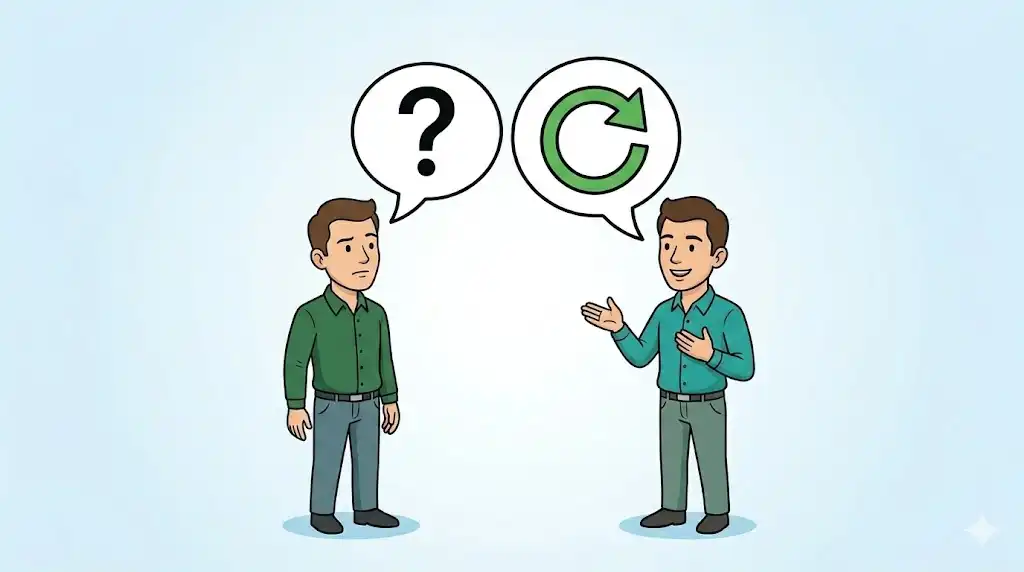
In this part of the lesson, we’re going to look at agreeing and repeating. First, let’s remember some words and phrases for agreeing. Listen to them and say them after me:
Okay! Yes! Sure! Certainly! No problem! No worries!
To ‘agree’ is to say ‘yes’ with different words. For example, ‘okay’, ‘sure’, ‘certainly’, ‘no problem’, and ‘no worries’ all mean ‘yes’. These agreeing words and phrases are very high frequency in English. This means that they are very common and normal.
Now let’s remember some phrases for repeating:
I’m sorry, could you repeat that for me, please?
Sorry, I didn’t understand that. Could you repeat it?
Sorry, can you repeat that, please?
Can you repeat that?
To ‘repeat’ means to say something again, or to say something another time.
You can change these phrases a lot. Listen to these examples:
Can you repeat that?
Can you repeat that, please?
Could you repeat that?
Could you repeat that, please?
I’m sorry, can you repeat that?
I’m sorry, can you repeat that, please?
I’m sorry, could you repeat that?
I’m sorry, could you repeat that, please?
I’m sorry, I didn’t understand. Can you repeat that?
I’m sorry, I didn’t understand. Can you repeat that, please?
I’m sorry, I didn’t understand. Could you repeat that?
I’m sorry, I didn’t understand. Could you repeat that, please?
In these phrases ‘I’m sorry’ means ‘Excuse me’ or ‘Listen to me’. It’s a polite phrase. English people say ‘I’m sorry’ all the time. Are they sorry? No, they are not sorry. ‘I’m sorry’ can mean ‘I feel bad about this’. But, if you hear someone say ‘I’m sorry’ it means the same as ‘Excuse me’ or ‘Listen to me’. English people also use the short form ‘sorry’. Listen to these phrases:
Sorry, I didn’t understand.
Sorry, I’m not gonna listen.
Sorry, my name’s Dave, not David.
Sorry, could you repeat that, please?
Now let’s listen to agreeing and repeating phrases in some sentences:
Hello, I’m Michael.
I’m sorry, could you repeat that, please?
Sure, no worries! I’m Michael.
How do you spell that?
It’s M-I-C-H-A-E-L.
I’m sorry, I didn’t understand. Can you repeat that?
Okay, no problem! It’s M-I-C-H-A-E-L.
What are you going to do on Saturday?
I’m going to watch TV.
I’m sorry, I didn’t understand. What does ‘watch TV’ mean?
No worries! Okay, ‘watch TV’ means watch a movie or a series.
Thanks. How do you spell ‘watch’?
It’s spelt W-A-T-C-H.
I’m sorry, I didn’t understand. Can you repeat that?
Sure! It’s spelt W-A-T-C-H.
Okay, I got it that time.
Did you hear the phrase ‘I got it that time’? It means ‘now I understand’.
This is the end of the episode. Thank you for listening to this Deep Dive! I’ll see you next time.
Join the Linguacade Patreon community to unlock full transcripts and audio for all levels (£4/month for total access)